Pragmatism Over Panic: Uzbek Views on Central Asian Military Reforms
A recent survey conducted among Uzbek-speaking audiences reveals an audience that is strategically aware, remarkably calm, and supportive of a “strength plus diplomacy” approach to Central Asian security.
Following the publication of a report on a panel discussion on military security in Central Asia, our partner organization Strategic Focus: Central Asia conducted a survey among its audience on its Uzbek-language Telegram channel regarding the Uzbek public’s perception of military processes in neighboring countries.
Between December 14 and 24, 2024, a comprehensive poll conducted via the “Strategic Focus: Central Asia” platform analyzed the sentiments of subscribers regarding the growing military modernization of neighboring states and Uzbekistan’s own strategic response.
The results paint a picture of a society that views military modernization not through the lens of a “security dilemma” or imminent conflict, but as a pragmatic necessity for regional stability. This analysis features translations and expert interpretation provided by political analyst Amirbek Salimov, exploring whether these military developments are seen as a source of stability or a growing threat.
Due to the sampling method, this survey cannot reflect the actual state of affairs in the opinion of the Uzbek population, but it does reflect the narratives among a specific audience that is interested in international relations issues.
A High Baseline of Awareness
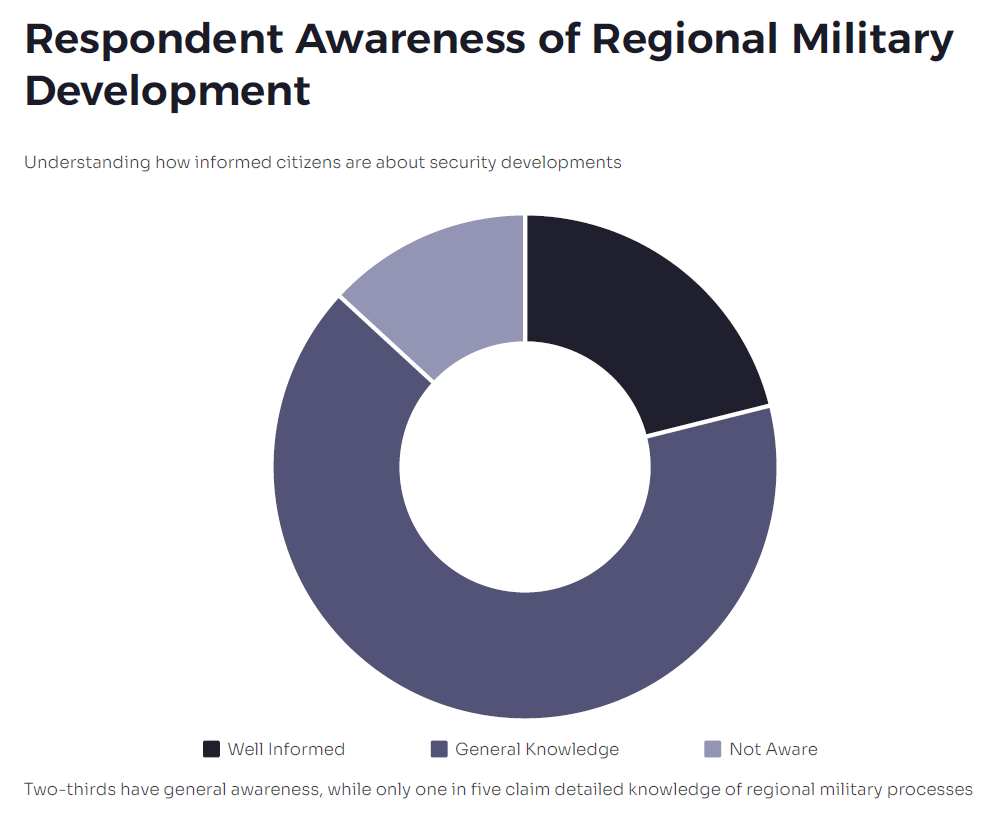
The survey indicates that security issues have moved into the mainstream public consciousness. Nearly 88% of respondents reported being aware of regional military developments, though most characterize their knowledge as “general” rather than detailed. Only 13% of the audience—primarily comprised of individuals interested in international relations—admitted to being unaware of the ongoing rearmament trends.
This high level of engagement suggests that respondents are actively monitoring the geopolitical landscape, creating a social mandate for clear and transparent communication regarding national defense policies.
Neighbors’ Rearmament: Stability, Not Threat
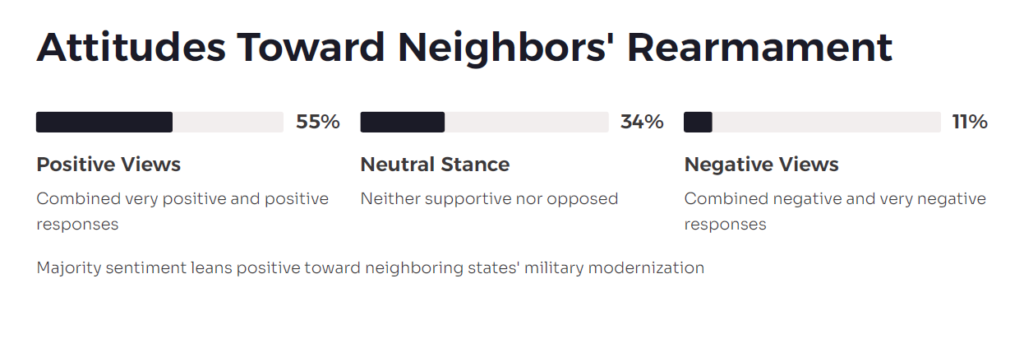
Perhaps the most striking finding is the lack of “alarmism” regarding neighboring states’ military buildup. While traditional realist theory might suggest that a neighbor’s gain in power is a direct threat, Uzbek respondents disagree:
- 55% view neighbors’ rearmament positively or very positively.
- 34% maintain a neutral stance.
- Only 11% expressed a negative or very negative sentiment.
When asked directly if this rearmament poses a threat to Uzbekistan, only 9% categorized it as a “serious threat.” Instead, 44% saw minimal or no threat at all. This suggests a high degree of confidence in Uzbekistan’s current foreign policy and its ability to maintain a regional balance of power.
Understanding the “Why”
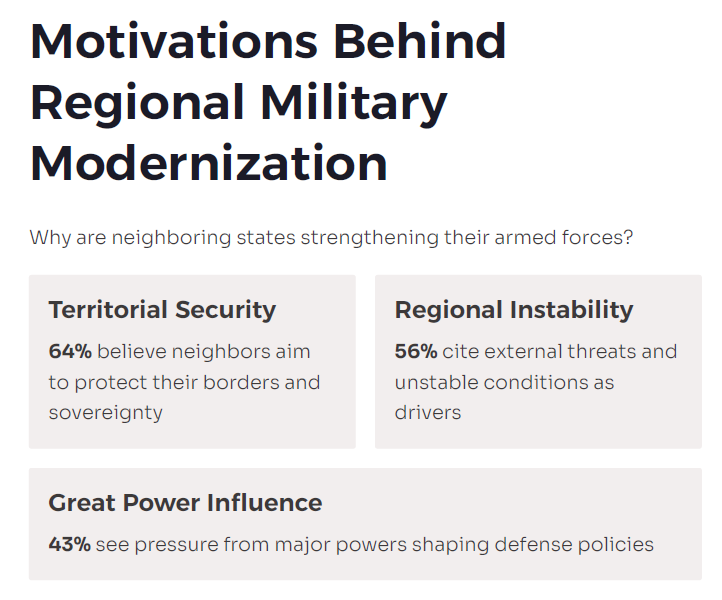
Respondents largely interpret the military reforms of Central Asia as a defensive and reactive phenomenon. The primary drivers cited for regional rearmament include:
- Territorial Security (64%): Protecting borders and sovereignty.
- Regional Instability (56%): Responding to external threats and volatile conditions.
- Great Power Influence (43%): Recognizing the pressure from global powers shaping local defense policies.
This indicates that the public views military growth as a tool for “deterrence” and “order” rather than a precursor to regional competition.
The Strategic Mandate: Strength + Diplomacy
When it comes to Uzbekistan’s own path, the public has a clear preference: The Multi-Vector Approach.
A significant 64% of respondents believe Uzbekistan should simultaneously strengthen its armed forces while pursuing regional diplomatic agreements. An additional 23% prioritize diplomatic and multilateral frameworks above all else. This “Strength + Diplomacy” model suggests that the public does not want the country to choose between being a military power and a diplomatic leader; they expect it to be both.
Furthermore, there is a solid foundation of trust in current reforms, with 78% of participants rating Uzbekistan’s current defense potential as at least “partially sufficient” or better.
Cautious Optimism for the Future
Despite acknowledging the delicate balance between defense and trust—with 62% agreeing that military reforms can sometimes undermine mutual trust—the outlook for the next decade remains optimistic.
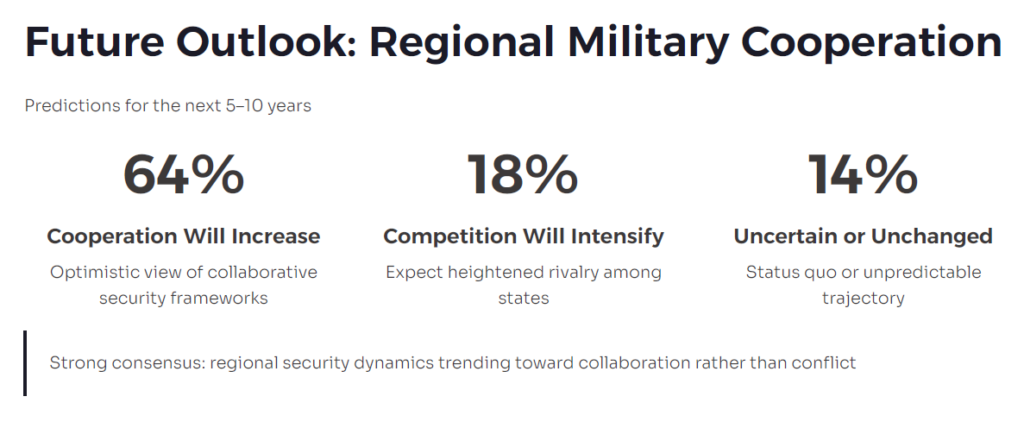
64% of respondents predict that regional military cooperation will increase over the next 5–10 years. Only 18% expect intensified competition. This underscores a deep-seated social desire for integration, with many respondents expressing support for a regional union or an “EU-style” security architecture for Central Asia that remains free from foreign military bases.
Conclusion
The “Regional Security Perceptions in Uzbekistan” survey highlights a mature and strategic public opinion. Rather than reacting to regional military processes with panic, Uzbeks view it with “strategic circumspection.”
For policymakers, the message is clear: there is strong public support for a policy that balances robust national defense with active, constructive regional diplomacy. The people of Uzbekistan see a future where security is not found in isolation, but in a well-defended, collaborative Central Asian neighborhood.
Research Methodology
- Conducted by: Strategic Focus: Central Asia (Telegram)
- Sample Size: ~550–600 responses per question (18,000 follower base)
- Date: December 14–24, 2024
- Language: Uzbek
- Audience Profile: Primarily Uzbek-speaking men with an interest in international relations and geopolitics.
- Origin: Inspired by reports from nightingale-int.com regarding Central Asian military security.
