“Army Without an Enemy”: Why Central Asia Is Urgently Swapping Soviet Doctrines for Turkish Drones
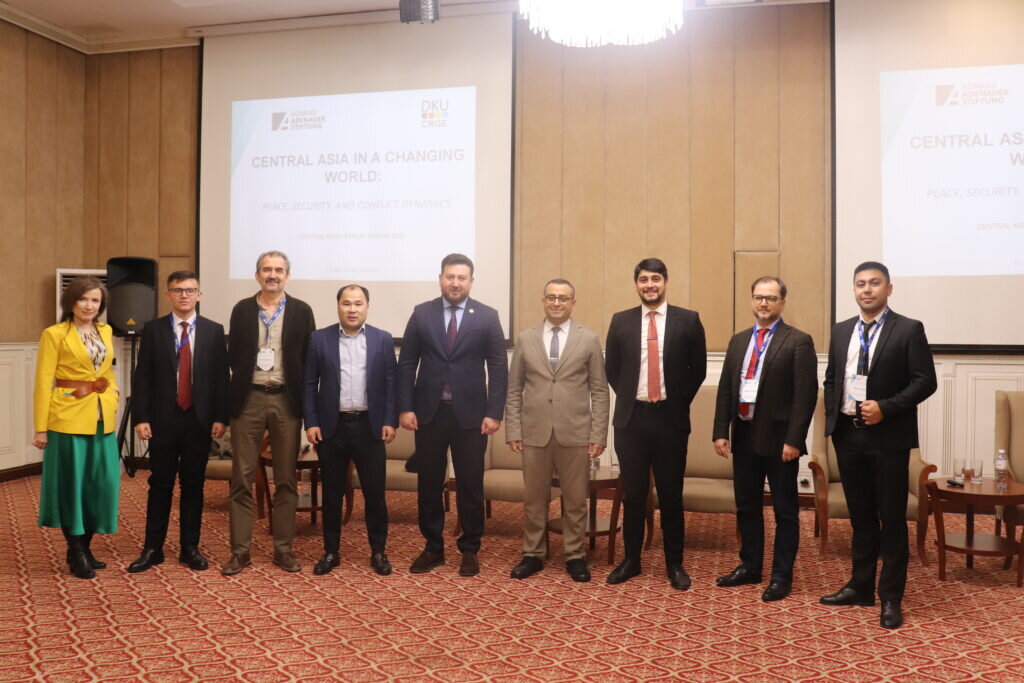
On November 28, within the framework of the scientific conference “Central Asia in a Changing World: Peace, Security, and Conflict Dynamics,” a panel session was held on the topic “Hybrid Security Architecture of Central Asia: Chinese Security Initiatives, the Impact of Turkish-Azerbaijani Cooperation on Russia’s Position, and the Evolution of Military Development.” The event was organized by the Centre for Research and Graduate Education (CRGE) at the Kazakh-German University in collaboration with the Konrad Adenauer Foundation (KAS) in Kazakhstan.
Is the security architecture in Central Asia changing under the influence of current crises?
Amid global geopolitical turbulence, Central Asian (CA) countries are experiencing a turning point in military development. During a recent expert panel, moderated and organized by Eldaniz Gusseinov, Head of Research at Nightingale Int., leading analysts and practitioners discussed the technological challenges of modern warfare and military security in Central Asia through the prism of expanding partnerships with new players.
The discussion went beyond dry statistics, touching upon fundamental questions, ranging from “who are we arming ourselves against?” to “why shooting down cheap drones with S-300 missiles is a path to bankruptcy?”
Below are the key points from the speakers.
Arms Market: Expanding Cooperation with Turkey and China While Preserving Russia’s Positions
Speaker: Rymgali Abykayev, diplomat and expert in defense and national security.
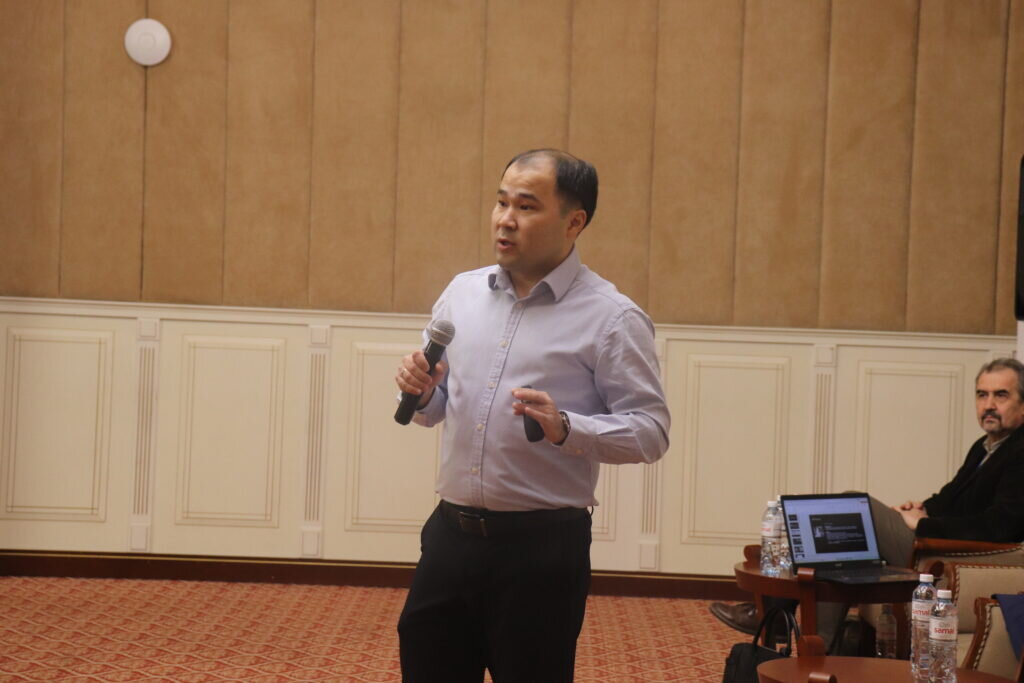
The main trend of recent years is forced diversification. The Russian military-industrial complex, occupied with the war in Ukraine, is not sufficiently supplying the Central Asian market with its own developments.
Figures of decline: According to some estimates, imports of Russian weaponry into Central Asian countries (2021-2023) decreased by 23%. During the same period, Russia’s share in Kazakhstan shrank to less than 50% from the traditional level of over 90%. However, Soviet weaponry remains the most prevalent across practically all domains (land, sea, and air) of the armed forces of Central Asian countries, and a mass transition to foreign counterparts is not expected in the near future.
Competition between Turkey and China: Turkey and China’s approaches to filling the Central Asian market with their own counterparts are becoming apparent; in particular, competition is noticeable in the supply of light armored vehicles and UAVs. Turkish and Chinese equipment is primarily competitive in markets lacking pressure from Russian manufacturers, especially given the needs of the front lines in Ukraine. Ankara and Beijing are actively applying “soft power” tools and expanding their presence in Central Asia in civilian sectors, which also facilitates the sale of military technologies. It is noted that the successful proliferation of Turkish and Chinese combat UAVs in Central Asia may also be linked to restrictions on the export of Western counterparts.
Turkey: Unlike China, Ankara offers joint production of both UAVs and naval equipment. Thereby, Turkey expresses a readiness to transfer technology. Turkmenistan, Kazakhstan, and Uzbekistan possess the most extensive range of Turkish equipment (combat boats/ships, light armored vehicles, and UAVs). The corvette “Deniz Han” serves as the flagship of the Turkmen fleet. Kyrgyzstan is actively experimenting with Turkish UAVs, while Tajikistan has so far only announced the acquisition of the famous “Bayraktars.”
China: Unlike Ankara, Beijing attempts to occupy a broader range of niches beyond UAVs and light armored vehicles. According to “Military Balance” data, Chinese air defense systems have entered service in Turkmenistan and Uzbekistan, while Kazakhstan has acquired a transport aircraft. Chinese-made combat aircraft are not entering the Central Asian market, likely due to restrictions from Russia, whose engines are used in the PRC’s most export-oriented products. Additionally, Beijing unilaterally blocks the export of advanced technologies such as J-20 aircraft. A certain distrust of Chinese technology is also noted, evidenced by the fact that J-17 aircraft sell more successfully under the Pakistani flag.
Market Segmentation: A certain diversification of armaments is noticeable in Central Asian countries. Kazakhstan and Turkmenistan actively purchase units from France, Spain, Israel, Turkey, Brazil, China, and other nations. Uzbekistan is also experimenting with Western, Turkish, and Chinese counterparts; a portion of American weaponry has been retained since the US withdrawal from Afghanistan. Kyrgyzstan and Tajikistan are less diverse in their approaches, retaining mainly Soviet models and purchasing Iranian, Chinese, and Turkish equipment on a limited basis. Such restrictions are most likely linked to budget deficits.
Military Doctrine: Army Without an Enemy
Speaker: Rustam Burnashev, Professor at the Kazakh-German University
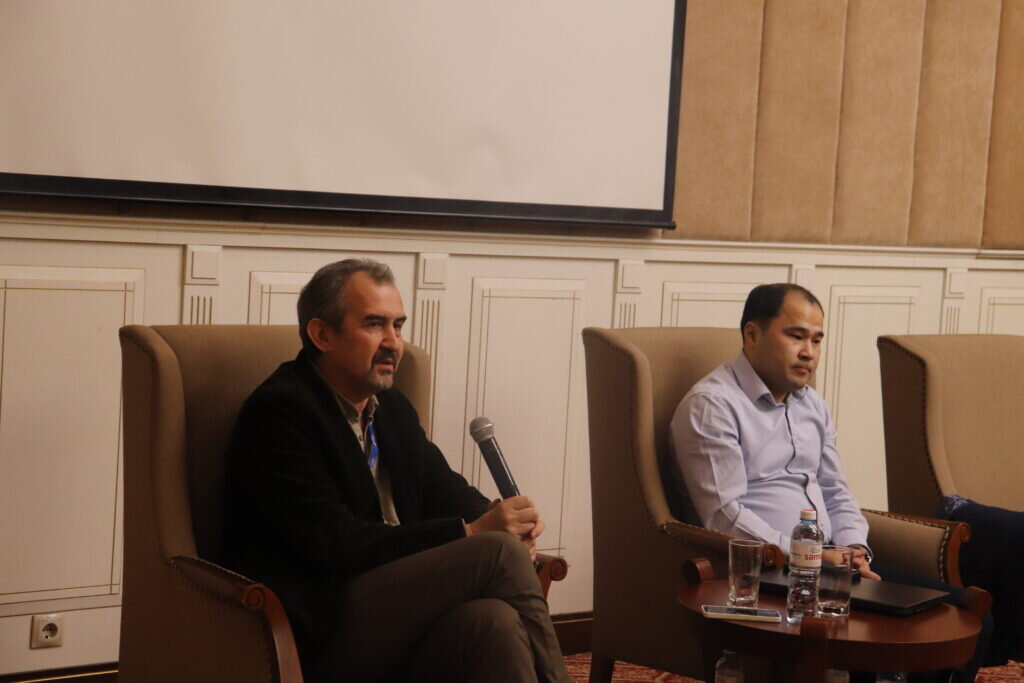
The main paradox of the region is that military development occurs in the absence of an officially defined potential adversary.
Evolution of fear: In the 1990s, armies were built on the inertia of the Cold War. Later, the focus shifted to the actions of “illegal armed groups,” internal conflicts, and terrorism (the Batken events). The situation in Afghanistan served as a justification for military budgets for a long time.
Doctrinal trap: The military doctrines of CA countries are strictly defensive in nature but do not name a probable adversary. It is impossible to officially prepare for war with any of the neighbors.
Red lines: To the question of when Kazakhstan’s rearmament would become a threat to Russia, the answer was given: “Never, as long as there are no political claims.” Moscow reacts calmly to the modernization of its neighbors’ armies as long as a loyal political vector is maintained.
Technologies: Drones as a “Game Changer”
Speaker: Emin Jabbarov, Executive Director of the “Heartland” Expert-Analytical Center
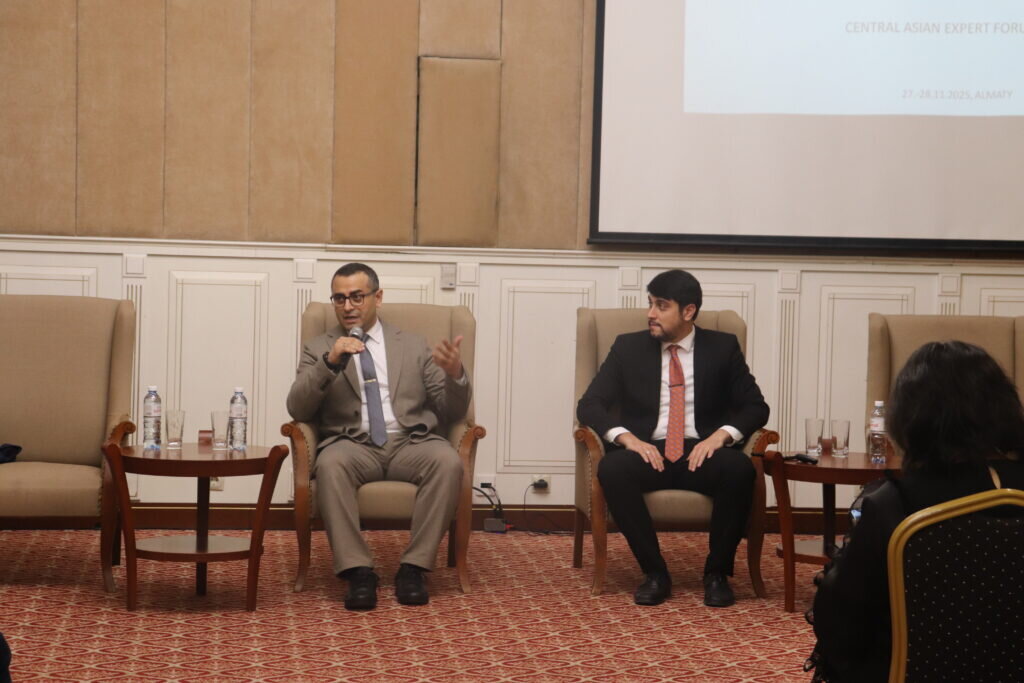
The most acute part of the discussion touched upon asymmetric threats. The experience of Karabakh and Ukraine has shown that old Soviet air defense systems are ineffective in the new realities.
War economics: Shooting down a cheap drone (costing $100,000 to $300,000) with an expensive missile of the S-300 complex is “shooting sparrows with gold bullets.” This economically drains the defender.
Kazakhstan’s vulnerability: Huge territories and low population density make classic air defense ineffective. The country needs not just the procurement of drones, but a nationwide anti-drone security system with AI elements.
Choice of partners: For a technological breakthrough, Kazakhstan needs Turkey (technology transfer) and South Korea (“long money” and loans).
The Chinese factor: China is considering using Private Military Companies (PMCs) to guard its investments within the framework of the Belt and Road Initiative in Central Asia, which may create a new challenge for the sovereignty of the region’s countries.
Discussion outcomes: interoperability of different weaponry within the CSTO is possible
During the Q&A session, experts came to the conclusion that interoperability of different weaponry within the CSTO (Collective Security Treaty Organization) is possible. Drones and air defense systems can operate autonomously; the main problem is not tactics, but the logistics and repair of a diverse fleet of equipment.
Central Asia is ceasing to be the “backyard” of the Russian military-industrial complex. The region is turning into a competitive field where Turkey offers brotherhood and factories, China offers accessible high technologies, and the West offers targeted high-end solutions.
The discussion highlighted that behind the purchases of “hardware” lies a deep crisis of goal-setting: the countries of the region are building modern armies while trying not to create a crisis of trust.
One thought on ““Army Without an Enemy”: Why Central Asia Is Urgently Swapping Soviet Doctrines for Turkish Drones”
Comments are closed.