Nightingale Int. at the Inaugural Central Asia – Nordics Think Tank Forum: The “Pilaf” of Integration
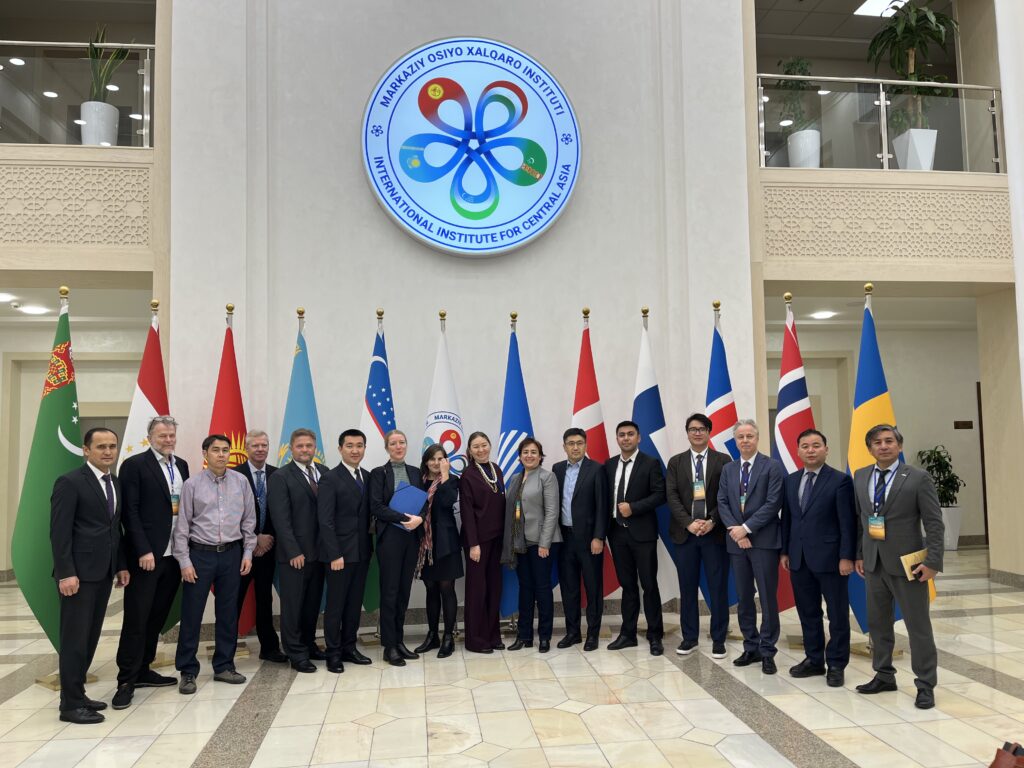
Our Country Head Tajikistan & Fellow, Umed Khakimov, was invited to speak at the Inaugural Central Asia – Nordics Think Tank Forum held at the International Institute for Central Asia in Tashkent, Uzbekistan.
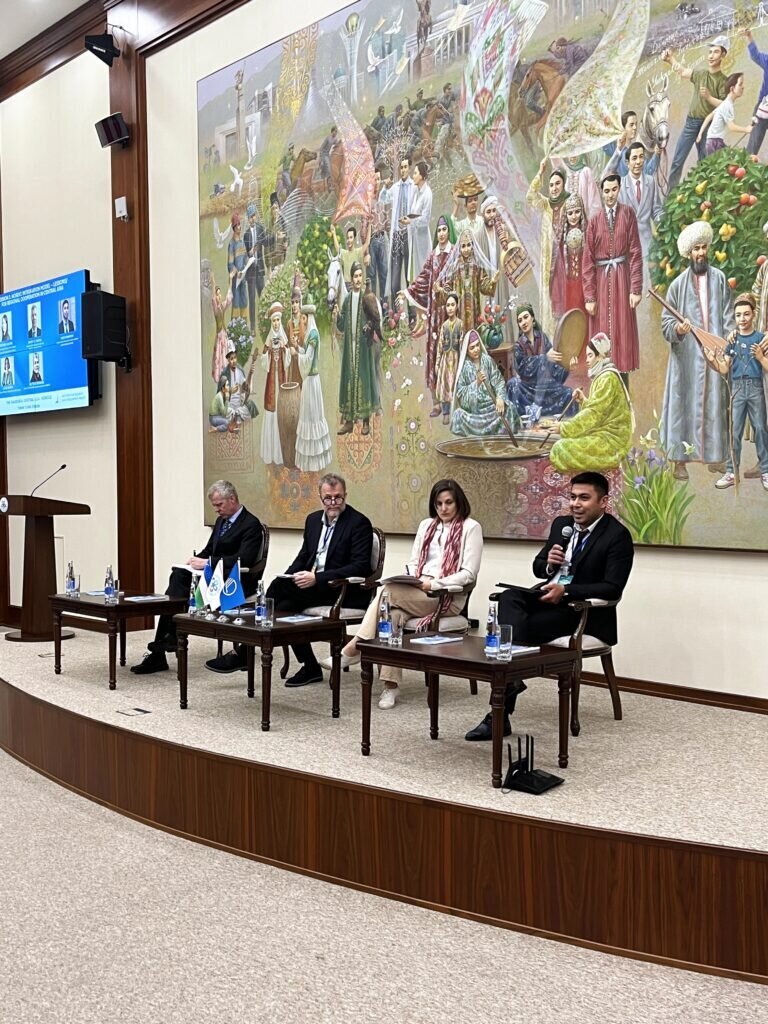
Participating in the high-level session titled “Nordic Integration Model – Lessons for Regional Cooperation in Central Asia,” Umed provided a unique and culturally resonant perspective on how the region can achieve deeper integration. Alongside distinguished panelists such as Svante E. Cornell and Teivo Teivainen, he illustrated complex economic concepts through the lens of culinary tradition, using the metaphor of “Pilaf” (Plov).
In his remarks, Umed drew a parallel between the “ingredients” of a nation and the “recipe” for success, suggesting that Central Asia could look to the Nordic model for inspiration:
- The Recipe Matters More Than the Ingredients: Umed noted that while every country has the basic ingredients (resources, people, and culture), the “taste” of development comes from the recipe. He proposed that the Nordic experience offers a valuable template for Central Asia, not to copy directly, but to use as inspiration for a unique regional blend.
- Trust and Institutions as the Spice and Oil: Expanding on the metaphor, he explained that social trust acts as the “salt”, essential for flavor but requiring balance, while inclusive institutions act as the “oil” that binds society together.
- The Cauldron of Cooperation: Umed highlighted that the “Cauldron” represents the shared space of regional integration: common markets, transport corridors, and political will. Without this vessel, the ingredients cannot combine into a single, cohesive dish.
In His Own Words
Below, we share the full transcript of Umed Khakimov’s inspiring speech regarding the “Pilaf of Integration”:
“Integration is like pilaf.
Everyone uses the same ingredients, but each has their own recipe.
The taste and spirit of the dish come from the recipe, from how the ingredients are combined. The same is true of regions: all countries have ‘basic ingredients’: resources, people, culture, and state institutions. But the recipe for development can vary.
If we imagine that Central Asia is preparing its own ‘pilaf of development,’ then the experience of the Nordic countries (Sweden, Norway, Denmark, Finland, Iceland) could be a recipe worth trying:
Social trust as a spice
In Scandinavia, there is a high level of trust between citizens and the state. It is like the right proportion of salt in pilaf: without it, the dish is bland, but if you overdo it, it tastes bitter. Central Asia could strengthen trust through transparent institutions and the fair distribution of resources.
Inclusive institutions as oil
Oil in pilaf binds the ingredients together. In the Nordic countries, institutions work to make everyone feel part of the common dish. For Central Asia, this means developing mechanisms for citizen participation, local self-government and equal access to services.
Education and innovation as carrots and onions
These ingredients add flavour. Nordic countries have focused on education and innovation, turning them into their main source of wealth. Central Asia could adopt this approach so as not to depend solely on raw materials.
Environmental sustainability as the right fire
Pilaf can be ruined if the fire is too strong or too weak. The Nordic countries have found a balance between economic growth and the environment. Central Asia, rich in natural resources, could learn this lesson to preserve the land for future generations.
Regional cooperation as a cauldron
A cauldron brings everything together. The Nordic countries have created the Nordic Council of Ministers, where they decide on common issues. Central Asia could develop similar mechanisms: a common market, transport corridors, environmental initiatives.
The bottom line is that all regions have similar ingredients, but the recipe is a culture of governance, a balance of interests and the ability to cook ‘together’. Central Asia could take the Nordic recipe not to copy it, but for inspiration, so that its pilaf is unique, but with the same rich flavour of cooperation, trust and sustainability.
And the most important ingredients: meat and rice. So, rice represents people (human capital), meat represents the economy, and of course, the cauldron is where all the integration of Central Asia takes place.
Pilaf is impossible to imagine without rice and meat, these are the foundations without which the dish simply does not exist. Similarly, integration in Central Asia is impossible without two key elements: people and the economy.
Rice is human capital, that is, education, culture, skills, and the energy of the younger generations. It is this that creates the foundation on which everything else can be built. Meat is the economy, resources, industry, trade, and transport corridors. It adds richness and strength, turning integration into a real process, not just an idea.
And all this comes together in the cauldron, the space of Central Asia, where integration itself takes place. The cauldron is a common market, infrastructure, cultural ties, political will. Without it, the ingredients will not come together in a single dish.
Thus, the recipe for integration is simple and clear: rice and meat are people and the economy, and the cauldron is the region where they come together. Everything else (spices, oil, carrots, onions) is trust, institutions, innovation, ecology. They enrich the flavour, but without the main ingredients, there would be no pilaf. And that is why the key question for Central Asia is how to combine human capital and the economy in one cauldron of integration to create a real pilaf of the future.”
We are incredibly grateful for the invitation to participate in this inaugural forum and for the opportunity to contribute to the ongoing dialogue regarding the future of Central Asia. It is an honor to share our vision for a region built on trust, cooperation, and shared prosperity.