Nightingale Head of Research Addresses AI and Geopolitics at Think Road Forum 2025
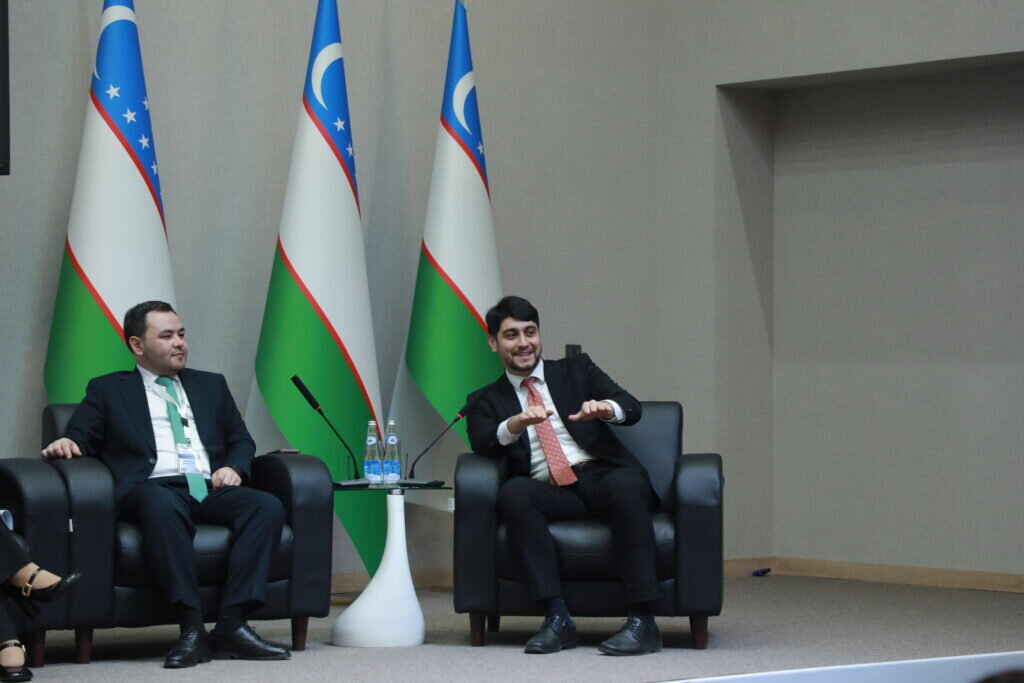
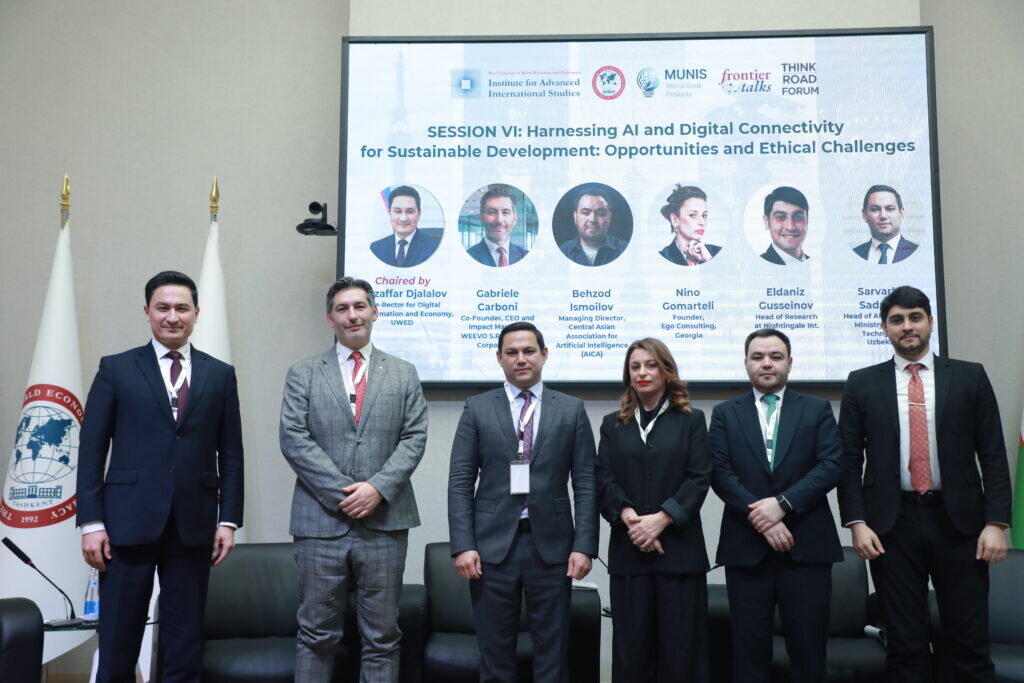
Eldaniz Gusseinov, Head of Research at Nightingale Int., was a featured speaker at the Think Road Forum 2025, the flagship annual event organized by the Institute for Advanced International Studies (IAIS). Nightingale Tajikistan Country Head Umed Khakimov also participated in the event.
Held at the University of World Economy and Diplomacy (UWED) in Tashkent, this year’s forum focused on the theme “Rethinking Sustainable Development in Central Asia in the Age of Emerging Regionalism.” The event brought together leading think tanks, civil servants, and business leaders to map a development roadmap for the historic Silk Road region.
Eldaniz participated in Session VI: Harnessing AI and Digital Connectivity for Sustainable Development, where he addressed the intersection of artificial intelligence and regional security. While much of the global conversation focuses on technical implementation, Eldaniz intervention highlighted the geopolitical implications of AI for Central Asian states.
During his speech, he outlined three critical challenges that AI poses to the region’s strategic landscape:
1. The Necessity of the “Human-in-the-Loop”
Eldaniz cautioned against the over-reliance on AI for critical analysis. He noted that while there is talk of AI replacing analytical divisions, the human element remains indispensable for verification and context. He highlighted the “recursive loop” challenge where AI models process information that was itself AI-generated, complicating the ability to distinguish between ground truth and synthetic data.
2. Algorithmic Bias and Regional Representation
Addressing the political limitations of Large Language Models (LLMs), he argued that current AI models often marginalize Central Asian voices. When users query global models about the region, the algorithms tend to prioritize sources from third-country think tanks rather than local media or experts. Eldaniz called for a concerted effort to train AI models on media resources from within Central Asia to ensure the region’s narrative is accurately reflected.
3. Digital Sovereignty and Strategic Autonomy
In his final point, Eldaniz addressed the risks of technological dependency.
“In Central Asia, we pride ourselves on multi-vector diplomacy, balancing relationships with major global powers. However, AI threatens to undermine this balance by creating a ‘uni-vector’ technological reality,” he stated.
He warned that if regional security agencies and analysts rely solely on AI infrastructure, such as clouds, chips, and algorithms owned by external superpowers, the region risks outsourcing its strategic thinking. He concluded that developing sovereign AI capabilities and fostering regional cooperation on digital infrastructure is a fundamental imperative for maintaining national independence in the 21st century.
About Think Road Forum
The Think Road Forum is a dynamic platform for exchanging ideas among stakeholders across the Silk Road region. It aims to foster cross-border collaboration and inform policy innovation to shape a sustainable future for Central Asia.
We extend our sincere gratitude to the Institute for Advanced International Studies (IAIS) for the invitation to participate in this significant platform and contribute to the dialogue on Central Asia’s future.